
Parts guide · rose joints
Rose joint vs rod end: choosing rose joint bearings for rally suspension
Race and Rally is a motorsport parts and safety equipment retailer in Lisburn, Co. Antrim, that stocks rose joint bearings and rod ends for competition cars.
This guide is a buyer’s comparison of rose joints, rod ends and spherical bearings — how they differ, and how to match bore, thread and hand — not a basic introduction only. Product details below come from the rose joint bearings collection at Race and Rally in Lisburn. It is a planning aid, not a rulebook, so always check your championship’s technical regulations and the part itself before you order.
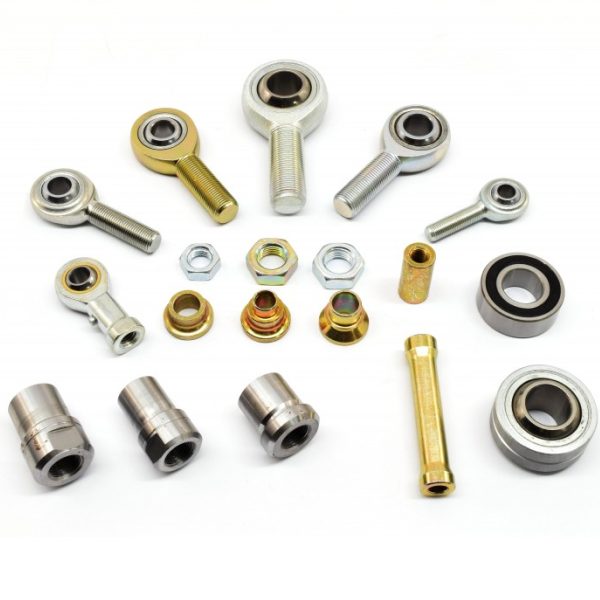
What is the difference between a rose joint and a rod end?
A rose joint and a rod end are the same part: a spherical ball and race held in an eye with a threaded shank.
In UK motorsport the everyday name is rose joint, after Rose Bearings. The same part is usually called a rod end, or a Heim joint, in engineering catalogues outside the UK. Race and Rally lists both names on the same collection because they describe one component, used on rally, circuit and hillclimb suspension, steering and gear linkages.
What is the difference between a rose joint and a spherical bearing?
A rose joint has a threaded shank and screws into a link; a spherical bearing is the ball and race only, pressed into a fixed housing.
Use the rose joint where you need to change link length for camber, castor, toe or roll-bar preload. Use a plain spherical bearing at a damper eye or a fabricated pickup, where the mount is fixed and you only need the joint to articulate. The two are related, but they are not interchangeable on the car.
How do you choose a rose joint for a rally car?
Choose a rose joint by matching bore, thread size and thread hand, then decide whether you need a rod end or a plain spherical bearing.
Three numbers specify a rod end. Get any one wrong and the part will not fit: the bore (the hole the bolt passes through), the thread size on the shank, and whether that thread is left-hand or right-hand. The bore and the thread are not always the same size, and that is a common ordering error.
Aurora, NMB and Fluro competition bearings
Race and Rally stocks Aurora, NMB MinebeaMitsumi and Fluro rose joints and spherical bearings specified for competition loads, not general engineering use.
The collection is imperial-led, with bores from 5/16" to 7/8" in left-hand and right-hand threads, plus a smaller set of metric parts. Aurora and NMB sizing is what most UK and Irish competition suspension is built around, including Escorts and purpose-built rally links.
Bore and thread are not always the same size
A 1/2" bore rose joint may have a 1/2" or a 5/8" male thread, and those are different parts in the Race and Rally range.
Check both figures on the product page before you order, and measure the bolt through the eye if you are unsure what is on the car. If the bore is larger than the bolt you are running, a reducing spacer can close the gap.
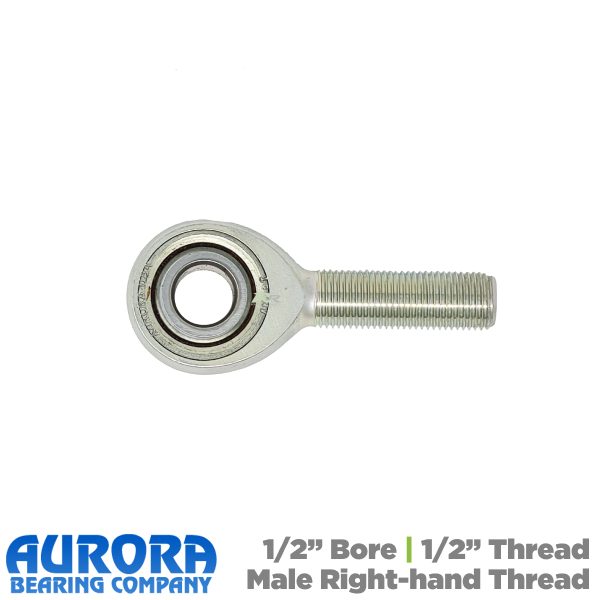
What is the Aurora AM8T rod end?
The Aurora AM8T is a 1/2" bore, 1/2" male right-hand rod end, listed as high-strength steel, 3-piece construction for high-load use.
The product page places it in the AM-series and lists a heat-treated, corrosion-coated alloy steel body and race, a hard-chrome-plated alloy steel ball, and a PTFE liner, for high-load, high-vibration applications. See the Aurora AM8T product page for the current specification.
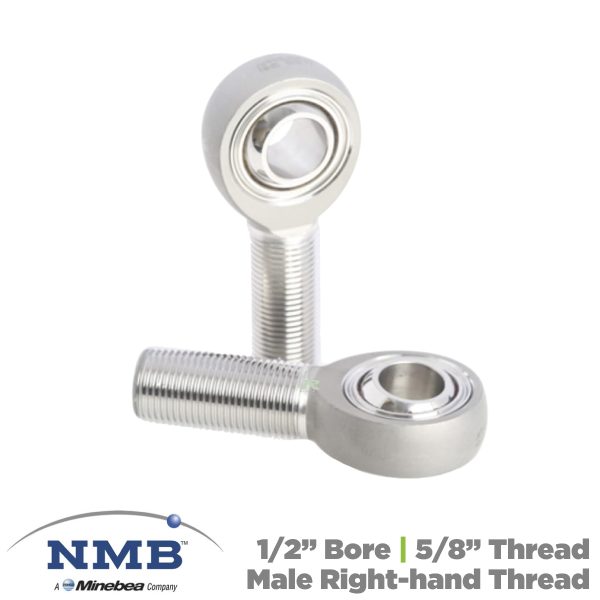
What if the bore and the thread are different sizes?
The NMB ARHT8E(R) is a stainless steel rod end with a 1/2" bore and a 5/8" male right-hand thread, so the bolt size and the shank thread are not the same.
The product page describes the ART-(R) series as a PTFE-lined, high-performance imperial rod end. Order this pattern only when your link actually uses a 5/8" thread with a 1/2" bolt — not as a substitute for a 1/2" by 1/2" joint such as the AM8T.
Left-hand and right-hand threads
Opposite-hand rose joints at each end of a link let you change the length by turning the tube, like a turnbuckle, without disconnecting either end.
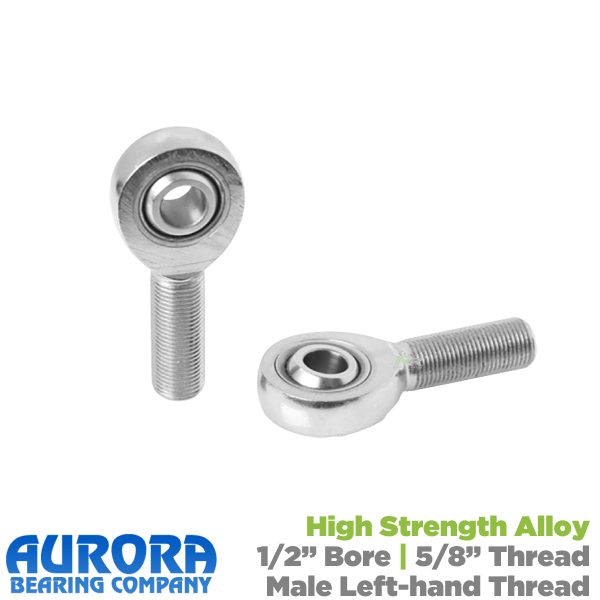
Right-hand threads at both ends make a fixed-length link. A left-hand joint at one end and a right-hand joint at the other is how you corner-weight a car or adjust toe between stages. Race and Rally carries both hands in the Aurora and NMB ranges. The Aurora XAB8T, for example, is a high-strength 1/2" bore, 5/8" male left-hand rod end with a PTFE liner and a heat-treated, corrosion-coated body.
High-angle spherical bearings for long-travel suspension
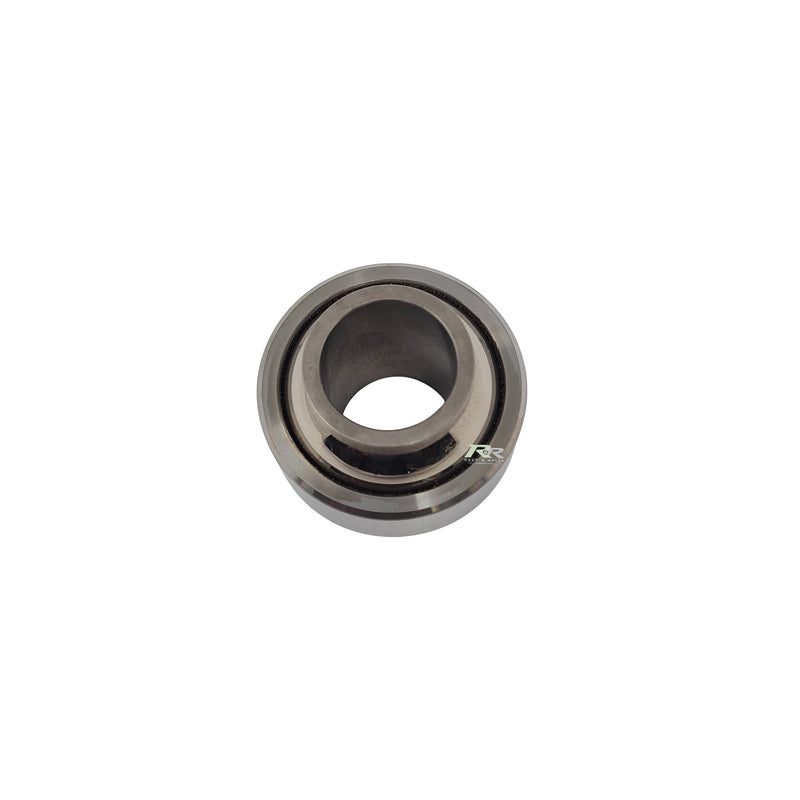
The NMB ABYTE12 high-angle spherical bearing is listed with 18 degrees of misalignment, which helps on long-travel gravel suspension.
Race and Rally’s collection notes that standard rod ends typically bind at around 12 to 15 degrees off centre, which is when a high-angle bearing is useful. The ABYTE12 product page lists a 3/4" (0.750") bore, 1.5625" outside diameter, a PTFE liner to SAE-AS81820, and a stainless steel ball and race. It is a spherical bearing, not a rose joint: it presses into a housing and has no threaded shank. See the NMB ABYTE12 product page for the full figures.
Lock nuts, spacers and metric options
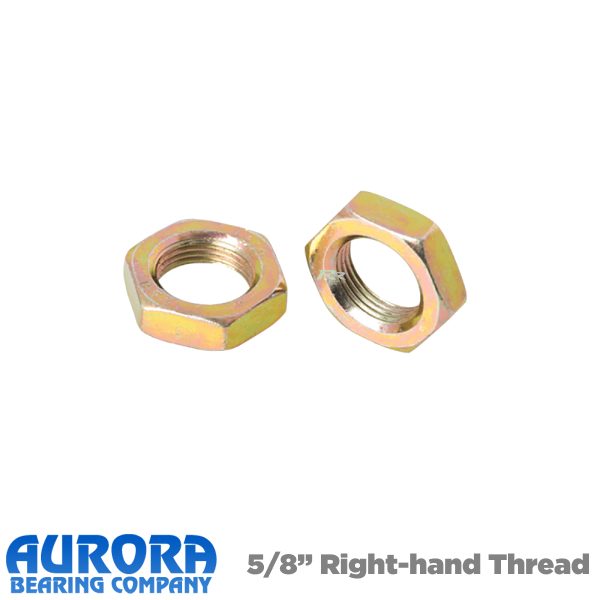
Race and Rally stocks 1/2" and 5/8" UNF carbon steel lock nuts in both hands, plus a RIX 1/2" to 3/8" reducing spacer and some metric parts.
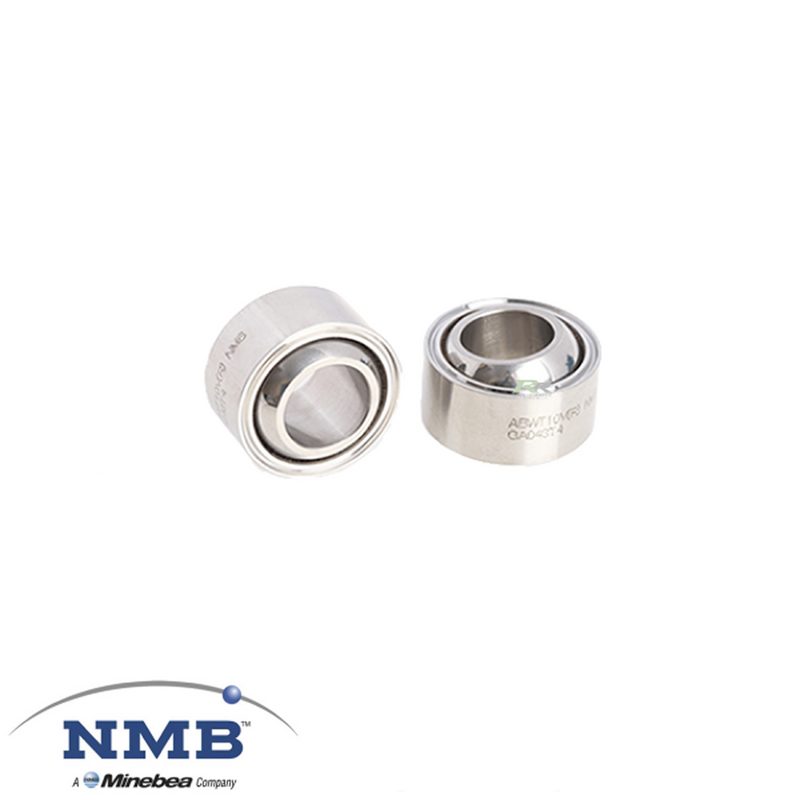
The 5/8" UNF lock nuts are listed as 439 grade carbon steel, used to secure a rod end once the length is set. The RIX Engineering spacer (WL178) reduces a 1/2" bore to a 3/8" bolt. Metric examples in the current collection include the NMB 14mm ID spherical bearing (28mm OD, PTFE lined, circlip retained) and Fluro metric tie-rod and spherical parts. The range is still imperial-led, so measure first if you are unsure.
When do you need a reducing spacer?
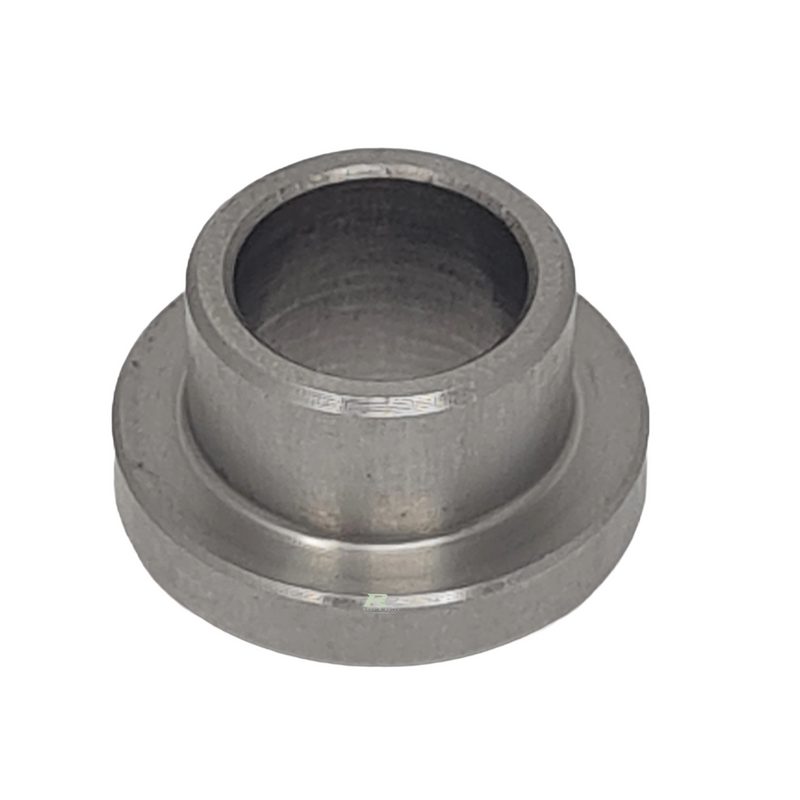
A reducing spacer is used when the rose joint bore is larger than the bolt you are running, such as the RIX Engineering 1/2" to 3/8" spacer in this range.
It does not change the thread on the shank. If the thread size or hand is wrong, you still need the correct rod end, not a spacer.
Where should each part go on a rally car?
Use rose joints on adjustable suspension, anti-roll bar and linkage tubes, and use spherical bearings at fixed damper eyes or fabricated pickup points.
| Location on the car | Part to use | Why |
|---|---|---|
| Top and bottom suspension links | Rose joint | Length adjustment for camber and castor |
| Anti-roll bar drop links | Rose joint | Length adjustment for roll-bar preload |
| Watts linkage or Panhard rod | Rose joint | Length adjustment for axle location |
| Gear and throttle linkages | Rose joint | Length adjustment for pedal and lever geometry |
| Damper eyes and fabricated pickups | Spherical bearing | Fixed mount, articulation only, no shank |
| Steering rack and track-rod ends | Dedicated steering parts | Do not substitute a suspension rod end |
How should you inspect rose joints between events?
Inspect rose joints between events for free play or notchiness in the ball, tight lock nuts, and enough thread engagement in the tube.
Grip the eye and try to move it against the shank. Any perceptible free play, or a notchy feel as it swivels, means the joint is worn and should be replaced. A shank wound most of the way out of the tube to gain length is a weak link. Regulations on rod ends vary by championship and can change, so confirm the current Motorsport UK or Motorsport Ireland yearbook, and the Motorsport UK regulations pages, before you commit to a design.
Race and Rally is a motorsport parts and safety equipment retailer in Lisburn, Co. Antrim, that stocks rose joint bearings and rod ends for competition cars.
Product details summarised from raceandrally.com on 19 November 2026. Specifications, sizes and availability can change, so check the product page or call the shop before you order. This page does not replace championship technical regulations.